Red Light, Green Light: The 100-Year-Old System Running Your City

Juni 19, 2026
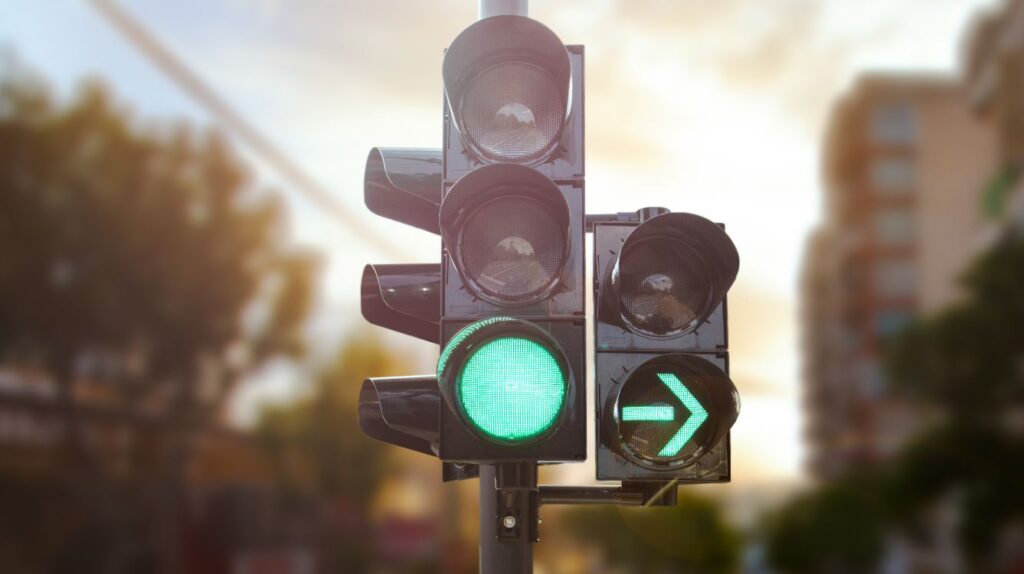
Sellectronics History of Traffic Lights Image 1024x574 1

The average car today contains more computing power than the Apollo 11 spacecraft. It can park itself, warn you of blind spots, and brake before you react. But to move through a city intersection, it still waits for a 100-year-old signal invented by a police officer with a handful of electrical parts.

This is the story of the traffic light: why it has lasted, how it has evolved, and what is quietly changing behind those three familiar colours.

Before the Three Lights: A World Without Order

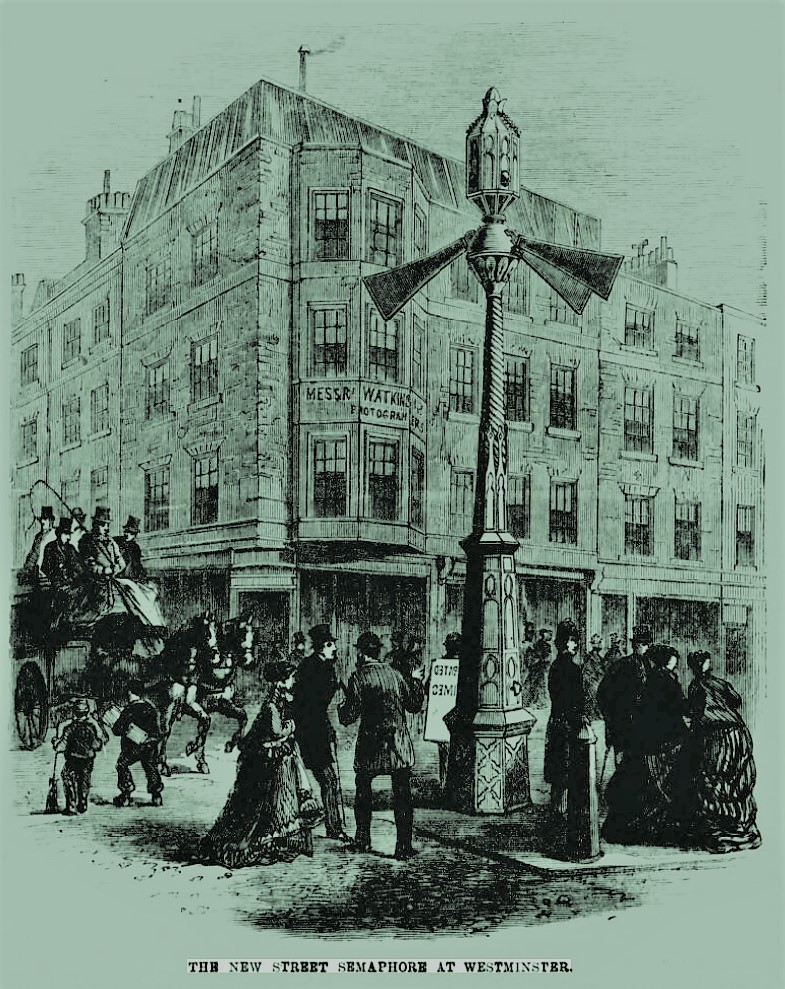
The traffic light was born from chaos. As cities industrialised and horse-drawn carriages shared streets with the first automobiles, intersections became dangerous bottlenecks where right of way was settled by nerve, speed, or collision. The London signal of 1868 had demonstrated both the need and the danger: gas-powered, manually operated, and ultimately explosive, it pointed toward a solution without achieving one.

The Westminster street semaphore

Image Credit: The Westminster street semaphore, from the Illustrated Times, 16 January 1869. Copyright the British Library Board via the British Newspaper Archive.


Electric signalling arrived in the United States in 1914, when Cleveland, Ohio installed what is widely recognised as the first electric traffic signal, designed by James Hoge. It used red and green lights, manually switched by an operator in a nearby booth. Europe followed through the 1920s, with Paris, London, and Berlin introducing electric signals as their streets filled with motor traffic. But these two-colour systems shared a critical flaw: with only stop and go, drivers had no warning of an impending change. At the higher speeds automobiles made possible, a signal switching suddenly from green to red forced either dangerous abrupt stops or reckless acceleration through changing lights. Some cities experimented with leaving both colours illuminated briefly during transitions, but this only confused drivers further.

Detroit, 1920: The Officer Who Added Yellow

The missing piece came from William L. Potts, a Detroit police officer born in Bad Axe, Michigan, in 1883, who had risen to become the city’s superintendent of signals. Detroit, as the beating heart of the American automotive industry, suffered some of the worst traffic chaos in the world. Potts witnessed the accidents that the crude two-colour signals could not prevent, and he understood the problem intuitively: drivers needed a warning.
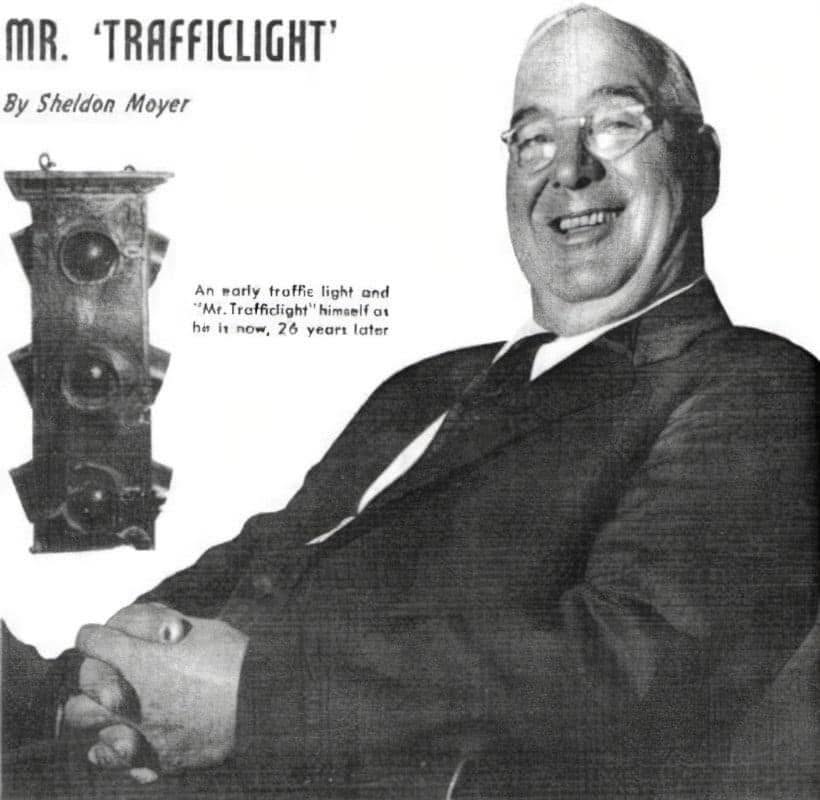
traffic signal

Image Credit: Standford.edu, “Mr. ‘Trafficlight’ By Sheldon Moyer, Motor News, March 1947”

Drawing on his knowledge of railway signalling, Potts conceived around 1917 of inserting a third colour – yellow, or amber – between green and red. This caution phase gave drivers the crucial seconds needed to slow safely rather than slam to a halt. In 1920, Potts designed the first four-way, three-colour traffic signal: a tower mounted at a busy Detroit intersection along Woodward Avenue, fitted with twelve lamps, three facing each direction. The original signal is preserved today at The Henry Ford Museum in Dearborn, Michigan.

Why a Single Colour Changed Everything

The genius of Potts’s addition was not technological complexity – it was psychological insight. The yellow light acknowledged a fundamental truth about human behaviour and physics: people and vehicles need time and information to change state safely. A binary stop-or-go command ignored the transition itself, the most dangerous moment at any intersection. By naming and signalling that transition, the amber light transformed intersections from points of abrupt conflict into managed flows.

The impact was immediate and measurable. After Detroit confirmed the new signals reduced accidents, the city expanded to fifteen four-way lights. The three-colour system spread rapidly – first across North American cities, then internationally, as European cities adopted it through the 1930s and 1940s. By the mid-twentieth century it had become the global standard, enshrined in the Vienna Convention on Road Signs and Signals (1968), which unified traffic signalling across Europe and beyond. Within a generation of Potts’s invention, the red-yellow-green sequence had become one of the few truly universal human systems, understood identically in Berlin, Riga, São Paulo, and Tokyo.

A Century of Refinement: From Timers to Intelligence

If the three colours have remained constant, the intelligence behind them has not. The evolution of traffic signal control over the past century traces three broad generations, each addressing the limitations of the last.

Generation One: Fixed-Time Control

Potts’s original tower was manually operated, requiring an officer to switch the lights. The first major refinement was automation through timers. Fixed-time signals ran on predetermined schedules based on manually collected vehicle counts, cycling through their phases regardless of actual conditions. This freed human operators but introduced a new inefficiency: a fixed-time light holds an empty side road on red whilst a queue builds on the main road, blind to the reality in front of it. For decades, this was simply accepted as the cost of automated order.

Generation Two: Vehicle-Actuated Signals

The next leap added senses. Vehicle-actuated signals used detectors – most commonly inductive loops buried in the road surface – to sense the presence of vehicles and adjust timing accordingly. A green light could now extend for a busy approach or skip an empty one. This responsiveness improved efficiency significantly, but it carried its own costs: inductive loops require cutting into the road to install and maintain, and each intersection typically optimised itself in isolation, unable to coordinate with its neighbours.

Generation Three: Adaptive and Intelligent Control

The current generation makes intersections genuinely intelligent. Adaptive traffic signal control systems adjust signal timing in real time across networks of intersections, responding to changing demand rather than following fixed plans. Increasingly, these systems draw on artificial intelligence – particularly reinforcement learning, where algorithms learn optimal signal strategies through experience, and computer vision, which extracts detailed traffic data from cameras without the cost and disruption of in-road sensors.

A 2025 review in Electronics documented how AI, the Internet of Things, and predictive analytics are reshaping adaptive control, whilst research in Intelligent Transportation Infrastructure the same year traced rapid advances in reinforcement learning that allow neighbouring intersections to cooperate – reducing queue lengths and waiting times across entire road grids rather than at isolated junctions. Computer vision has emerged as a particularly important enabler: camera-based detection offers lower installation costs than buried sensors whilst capturing richer data, including queue lengths and vehicle trajectories, making it well suited to real-time adaptive control.

The Intelligent Intersection Today

The promise of adaptive control is no longer theoretical. Several large-scale deployments demonstrate what intelligent signals can achieve – and the results are arriving closer to home.
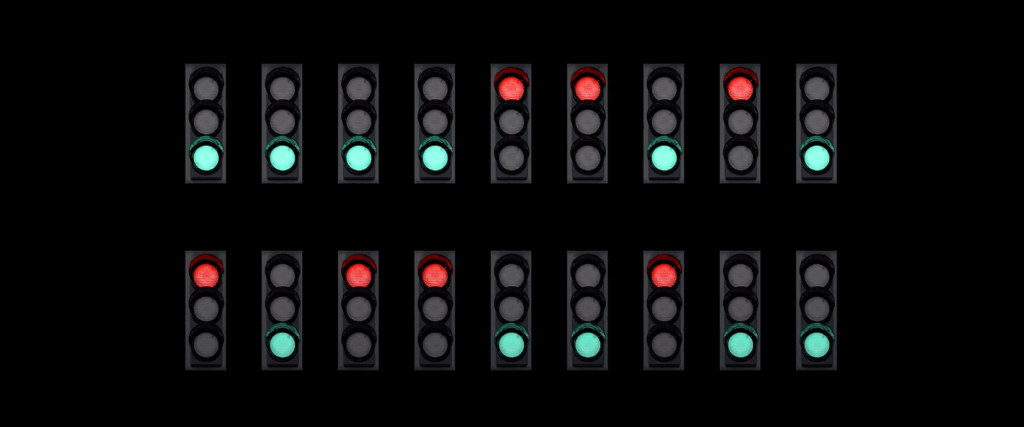
hero B

Image Credit: Google Blog

Google’s Project Green Light: Perhaps the most widely discussed recent example uses no new hardware at all. Launched as a Google Research initiative, Green Light analyses driving patterns from Google Maps data and recommends signal timing adjustments to city engineers. By June 2025 it had expanded to roughly 70 intersections across 17 cities – including Hamburg, Manchester, and Abu Dhabi alongside cities in India, Brazil, and the United States – influencing up to 30 million car journeys monthly. Early results suggest reductions of up to 30% in stops and up to 10% in intersection emissions. Boston, where the programme was expanded city-wide in 2025, reported stop-and-go traffic reductions of over 50% at specific intersections.
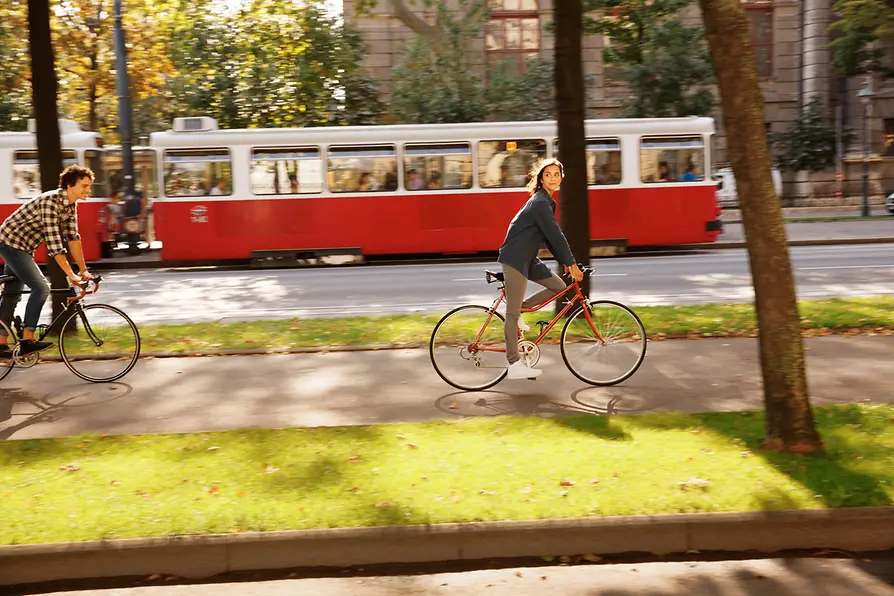
50151 radfahren am ring strassenbahn fahrrad rad sommer sport

Image Credit: WienTourismus/Peter Rigaud

Vienna’s coordinated network: European cities have developed adaptive signal systems targeting their own sustainability goals. Vienna’s Sustainable Urban Mobility Plan targets an 80% eco-mobility share, with adaptive signal priority for trams, buses, and cyclists contributing to a modal shift that has seen public transport and active travel grow steadily.
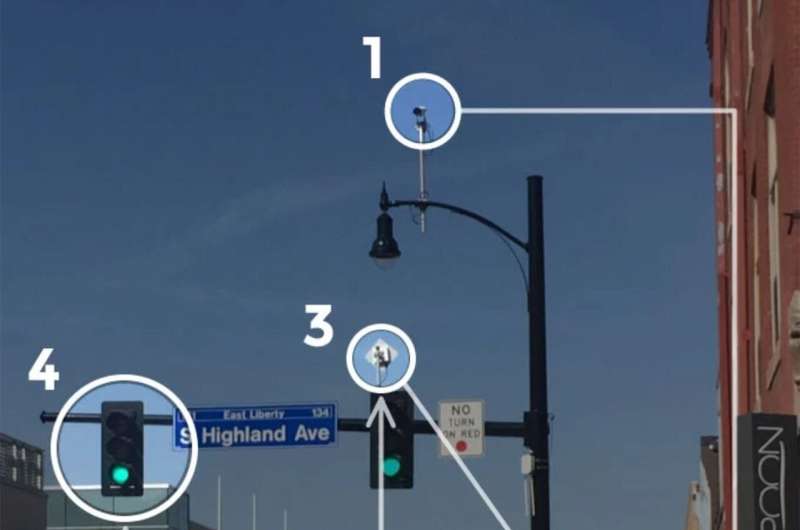
surtracallow

Image Credit: Techxplore.com

Pittsburgh’s SURTRAC: Developed at Carnegie Mellon University and deployed since 2012, this decentralised AI system has cut vehicle wait times by roughly 40%, travel times by 25%, and emissions by 21% – improvements achieved without building a single new road. The results have attracted sustained interest from European transport authorities exploring similar approaches.

These figures matter because intersections are pollution hotspots: research cited by Google indicates that pollution at city junctions can be far higher than on open roads, with roughly half of those emissions produced by vehicles accelerating away after a stop. Smoothing the stop-and-go rhythm that Potts’s yellow light first began to tame thus delivers environmental as well as safety benefits a century later. Yet a crucial point recurs across these systems: AI does not replace human traffic engineers. It provides them with data and recommendations, leaving judgement and accountability in human hands.


Connecting the Modern Intersection: Fits Traffic

The leap from fixed-time signals to intelligent networks depends on something Potts never had to consider: connecting and coordinating diverse equipment across a city. A modern intersection is no longer a single tower but an ecosystem of cameras, detectors, variable message signs, weather stations, and the traffic lights themselves. Making these work as a unified system – rather than isolated devices – is precisely the challenge Fits Traffic addresses.

Developed by a technology company with two decades of experience and a pioneer of intelligent transport solutions in the Baltic region, the Fits Hub platform leverages real-time data analysis, artificial intelligence, and machine learning to make traffic networks smarter and more proactive. Several of its capabilities connect directly to the century-long evolution of the traffic signal.

Unifying roadside equipment, including traffic lights: Fits Hub integrates sensors such as weather stations, variable message signs, traffic lights, video cameras, and traffic detectors into a single platform, automatically detecting faults or anomalies. A signal that fails is no longer discovered by frustrated drivers but flagged instantly, allowing faster repair and safer intersections – addressing the reliability challenge that grows as signals become more complex.

Intelligence from existing cameras: Reflecting the wider shift from buried inductive loops to computer vision, Fits Hub turns existing camera infrastructure into an accurate source of traffic counting and classification and can even generate origin-and-destination information. This provides the granular, real-time data that adaptive signal control requires – without the cost and road disruption of installing new sensors.

From reactive to predictive management: By collecting and analysing data from multiple sources, the platform uses historical patterns to forecast future traffic flows, enabling cities to anticipate congestion rather than merely react to it. This supports adaptive signal control and proactive traffic management–the third-generation intelligence that distinguishes a modern network from Potts’s manually switched tower.

The practical value follows the same logic that guided Potts in 1920: better information produces safer, smoother intersections. Faster reactions to faulty equipment improve road safety; unified operations reduce data silos and operational costs; and integration into existing infrastructure avoids dependence on any single hardware supplier. In a real-world example, this approach has been applied to transnational monitoring and management of roadside intelligent transport equipment along the Baltic E67 road corridor.

The Same Three Colours

There is something quietly remarkable about standing at an intersection today. The vehicles waiting at the line may be electric, semi-autonomous, and connected to satellite navigation. The signal controlling them may be governed by reinforcement-learning algorithms processing data from a decade of global driving patterns. And yet the instruction itself – red, yellow, green – is exactly what William Potts devised for horse-drawn carriages and Model T Fords a century ago.

This endurance is not a failure to innovate. It is a testament to how completely Potts solved the underlying human problem. He recognised that safe movement requires not just commands but warnings – not just stop and go, but the managed transition between them. Every layer of intelligence added since, from timers to inductive loops to artificial intelligence, has served that same insight rather than replacing it. The technology beneath the lights has been reinvented many times; the language of the lights has not needed to be.

As cities pursue safer roads, lower emissions, and smoother journeys, the frontier of innovation has moved from the colours themselves to the intelligence that times them and the systems that connect them. Platforms like Fits Traffic represent the latest chapter in that hundred-year story: not changing what the lights say, but making the vast, invisible machinery behind them smarter, more reliable, and more responsive to the people waiting at the line. The three colours endure. What changes is how wisely we use them.

Quellen

The Henry Ford. First Tri-Color, Four-Directional Traffic Signal, 1920. Digital Collections. Retrieved from https://www.thehenryford.org/collections-and-research/digital-collections/artifact/227457

Library of Congress. Who invented the traffic signal? Everyday Mysteries. Retrieved from https://www.loc.gov/everyday-mysteries/motor-vehicles-aeronautics-astronautics/item/who-invented-the-traffic-signal/

Detroit Historical Society. Encyclopedia of Detroit: Traffic Signal. Retrieved from https://detroithistorical.org/learn/encyclopedia-of-detroit/traffic-signal

Gheorghe, C., & Soica, A. (2025). Revolutionizing urban mobility: A systematic review of AI, IoT, and predictive analytics in adaptive traffic control systems for road networks. Electronics, 14(4), 719. https://doi.org/10.3390/electronics14040719

Advances in reinforcement learning for traffic signal control: a review of recent progress. (2025). Intelligent Transportation Infrastructure. Oxford Academic. https://doi.org/10.1093/iti/liaf009

Scientific American. (2025, February). Google’s Project Green Light uses AI to take on city traffic. Retrieved from https://www.scientificamerican.com/article/googles-project-green-light-uses-ai-to-take-on-city-traffic/

Google Research. Green Light: Using AI to reduce traffic emissions. Retrieved from https://sites.research.google/gr/greenlight/

City of Boston. (2025, June). Mayor Wu announces expansion of Project Green Light signal optimization program. Retrieved from https://www.boston.gov/news/mayor-wu-announces-expansion-project-green-light-signal-optimization-program

Fits Traffic. Traffic & Infrastructure Management. Retrieved from https://fitstraffic.com/en/traffic-and-infrastructure-management/

Note: Historical details regarding William L. Potts and early traffic signals are drawn from The Henry Ford Museum (which preserves the original 1920 signal), the Library of Congress, and the Detroit Historical Society; sources differ slightly on the exact Woodward Avenue intersection and installation date. Information about Fits Traffic solutions is based on company materials (fitstraffic.com).

Weitere Artikel

Wir beraten Sie zur Verkehrssicherheit

Senden Sie uns Ihre Frage