
Behavioural Economics in Transport Policy: How Nudges Drive Sustainable Mobility

May 20, 2026
pexels pixabay 221000

We often assume that better technology will automatically lead to greener transport choices – but reality tells different story. Electric vehicles, smart infrastructure, and data-driven systems already exist, yet emissions remain stubbornly high. The real bottleneck is not technology, but human behaviour. This is where behavioural economics becomes essential: it reveals how changes in choice architecture can quietly – but powerfully – steer people toward more sustainable mobility.

A key concept in behavioural economics is the nudge. A nudge is any aspect of choice architecture that alters behaviour in predictable ways without forbidding options or significantly changing economic incentives. It works by subtly reshaping the context in which decisions are made – making certain choices more visible, more convenient, or more salient at the moment of decision. Importantly, nudges do not remove freedom of choice – they preserve autonomy while guiding behaviour in a predictable direction.

In transport policy, this means that instead of mandating electric vehicle adoption, policymakers can design environments where sustainable options naturally stand out. For example, electric vehicle charging stations can be placed in the most visible and accessible locations, or electric vehicles can be set as the default option in leasing and fleet programs. Even small changes in how options are presented can significantly influence real-world behaviour.

However, this approach also raises important questions: where is the line between gentle influence and manipulation, and how can the effectiveness and transparency of nudges be properly evaluated in complex transport systems?

The Psychology Behind Transport Choices

Traditional transport policy assumes rational decision-making, but psychological research shows humans rely on mental shortcuts and emotional attachments when making transport choices. Nobel laureate Daniel Kahneman distinguished between System 1 (fast, automatic, intuitive) and System 2 (slow, deliberate, analytical) thinking. Transport choices engage both, but System 1 often dominates – reaching for car keys becomes automatic even when alternatives exist.
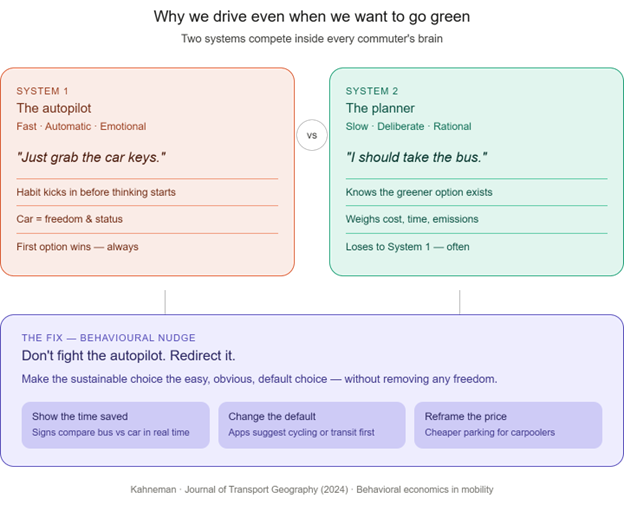
Behavioural nudge

Image Credit: AI generated

Research in Journal of Transport Geography (2024) found that 40% of persuasive messages targeting System 1 thinking received positive feedback regarding route choice – even small improvements of 3-5% in green transport mode selection significantly support Sustainable Urban Mobility Plans across European cities. This explains why someone genuinely concerned about climate change may still drive daily: System 1 habits override System 2 intentions.

Behavioural economics challenges the ‘rational actor’ model. People satisfice rather than optimize – choosing the first acceptable option rather than weighing all alternatives systematically. A 2024 study found that subconscious influences, including symbolic associations with transport modes, profoundly affect choices. The car represents freedom; the bus may carry lower status associations regardless of service quality. Understanding these psychological realities enables intervention design that works with rather than against human nature.
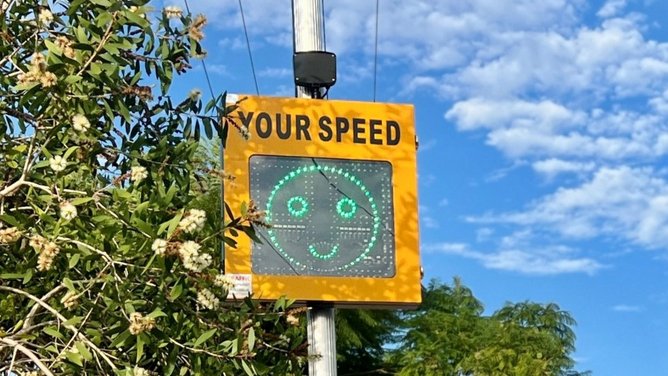
f2b18bf91e28e6c6e813f02dccb18ff0b0e5168e 16x9

Image Credit: City of Vincent

When Nudges Work - and When They Don't: Examples from Around the World

European cities have pioneered various nudge interventions, generating measurable evidence of effectiveness.

Stockholm, Sweden – the power of a word. When Stockholm introduced road pricing, public support sat at 36%. City planners tried something small before anything else: they stopped calling it a “congestion charge” and started calling it an “environmental charge.” Same fee, same roads, different word. Support climbed to 66% after the trial – not because the system changed, but because the framing did. Traffic across the inner city fell by 20% and stayed down years later. Meanwhile, electric vehicle sales in Stockholm County grew by 23% as drivers recalculated what ownership really costs. A pricing signal turned an automatic daily habit into a conscious choice –and that gap between autopilot and awareness was enough to reshape an entire market.
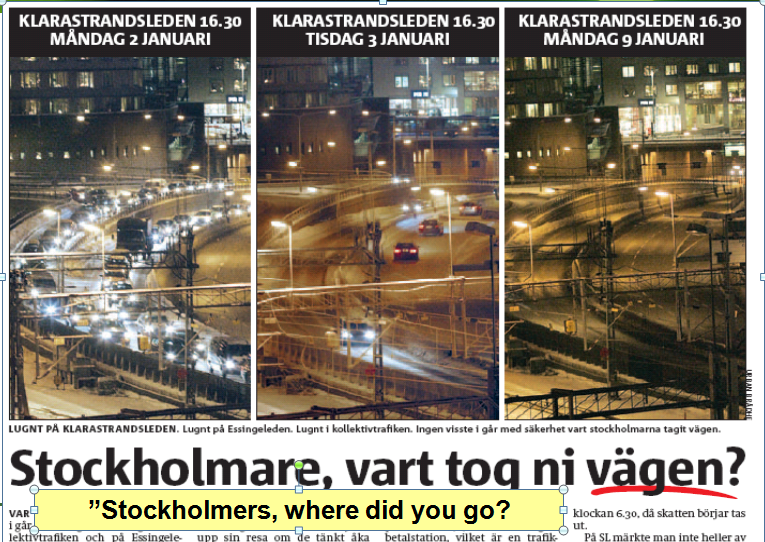
Less traffic

Image Credit: Tools of Change


Rotterdam, Netherlands – a sticker on a travel card. In 2020, researchers handed bus passengers a free card holder printed with a single line identifying them as environmentally conscious travellers. No discount. No new bus routes. No app. Just a label. Then they tracked actual journey data – not surveys, not self-reporting – and found that labelled passengers rode the bus significantly more in the weeks that followed. The bus hadn’t improved. The city hadn’t changed. Only one thing shifted: how passengers saw themselves when they stepped on board. Rotterdam’s lesson is uncomfortable for transport planners who default to infrastructure: sometimes the most effective intervention isn’t the vehicle – it’s the identity of the person riding it.
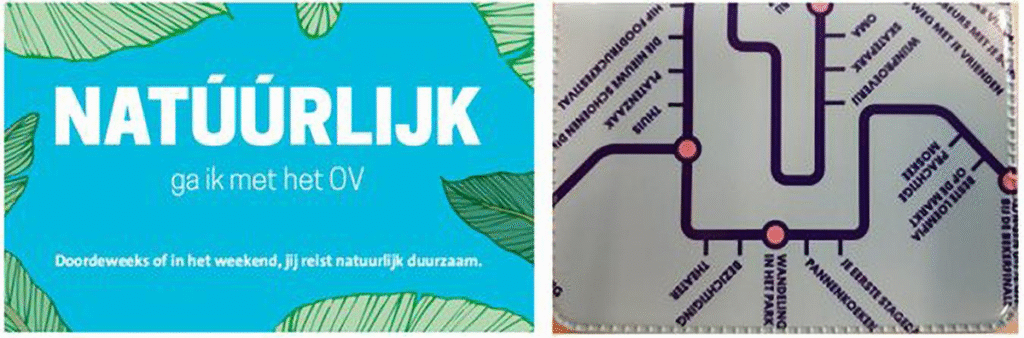
 

fpsyg 12 633865 g001

Image Credit: Frontiersin.org (Nudging Commuters to Increase Public Transport Use: A Field Experiment in Rotterdam)


Chicago, USA – an optical illusion on the road. At one of Lake Shore Drive’s most dangerous curves, the city tried the obvious fixes first: clearer lane markings, bigger warning signs, flashing lights. None of it worked. In 2006, engineers tried something different – painting white lines across the road that gradually narrowed as drivers approached the sharpest point, creating the illusion of accelerating. Within six months, crashes at the curve dropped by 36% compared to the same period the year before. No new laws, no fines – just paint on asphalt.

how road designers are manipulating us into being more careful drivers lead 1543861420

Image Credit: Marc Urbano


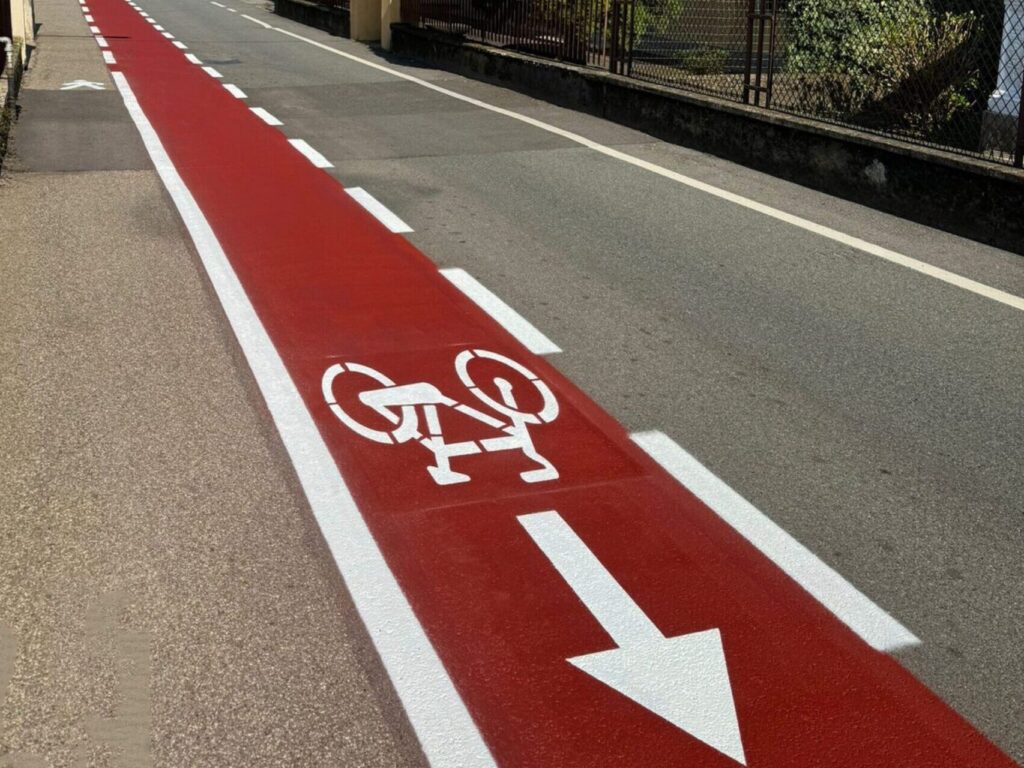
Norway – red cycle lanes. A study in Oslo examined what a simple red-coloured cycle lane actually does to behaviour. The answer: more than just marking the road. Cyclists rode more predictably, drivers kept greater distance, and GPS data confirmed real behavioural changes – not just self-reported impressions. Colour, it turns out, communicates more than direction.
RSZ Vernisol Spartraffico SB Acrylic Acrylux Red Cycle Lane Arona scaled e1755266806569

Image Credit: Prismo Global


Stockholm, Sweden – the piano staircase. A Stockholm metro station transformed an ordinary staircase into a giant piano keyboard that played a note with every step. The result: 66% more people chose the stairs over the escalator. More surprisingly, the effect did not fade in the weeks and months that followed.

 

304026

Image Credit: KJ Vogelius / Flickr

When nudges fail

Sweden – social norms do nothing for public transport. One of the largest field experiments in transport nudging tested whether social norm messages – telling people that most of their neighbours take the bus – would increase ridership. Across studies with over 14,000 participants, the effect was precisely zero. What did work? Financial incentives – but only for as long as they lasted.

Globally – more nudges can mean worse results. Research has found that combining multiple nudges does not always outperform a single well-designed one – and in some cases actively undermines the effect. Adding visual elements to reinforce a social norm message, for instance, can reduce rather than amplify the impact. More is not always better.

Globally – around 15% of nudges backfire. A systematic review of 65 published studies found that roughly one in seven nudge interventions does not just fail – it makes things worse. The most common culprit is social norm messaging: when people learn that others behave worse than they do, some take it as permission to lower their own standards.

These cases make a broader point. A nudge that backfires and goes unmeasured can quietly do harm for years. This is precisely why data infrastructure is not a technical afterthought – it is what separates accountable policy from well-intentioned guesswork.


The Ethics Question: Nudge or Manipulation?

If nudges work precisely because people do not consciously notice them, a fair question arises: is that manipulation? A 2023 systematic review of the ethics literature found that this concern – respect for individual autonomy – dominates the debate above all others.

The critique goes something like this. Nudges, by design, bypass deliberate thinking. They work on the automatic, intuitive part of the mind rather than engaging people as rational agents capable of weighing their options. Critics argue that this is a subtle form of disrespect – treating people as objects to be steered rather than subjects capable of making their own informed decisions. Even if the outcome is beneficial, the process may undermine something important: the sense that we are genuinely in control of our choices.

But there is a counterargument worth taking seriously. Choice architecture already exists everywhere – it just usually favours cars. Wide roads, free parking, and poor cycling infrastructure are all design choices that nudge people toward driving. The real question is not whether to shape behaviour, but whether to do so deliberately and in the public interest.

Transparency appears to be the key. A 2024 study found that telling people about a nudge does not make it less effective – and often makes it more acceptable. When authorities are open about what they are doing and why, an intervention stops feeling like manipulation and starts feeling like policy. Stockholm’s congestion charge works partly for this reason: people understood its purpose, and support grew as they experienced the benefits firsthand.


From Theory to Practice: Why Data Makes Nudges Accountable

Good intentions are not enough. A nudge that has not been measured is little more than a guess – and a large-scale 2022 meta-analysis delivered a sobering verdict on just how many guesses have been passed off as policy. Analysing choice architecture interventions across multiple behavioural domains, researchers found that the effects of nudging were real, but considerably more modest than the field had long assumed – and highly variable depending on context.

This matters for governments. Budgets are finite, and policymakers cannot keep funding interventions that may not be working. Without solid measurement, there is no way to tell the difference between a nudge that genuinely changes behaviour and one that simply looks good on paper.

The answer, then, is not to abandon nudging – it is to measure it properly. And this is where technology becomes essential. Modern traffic monitoring systems can do what surveys and self-reporting never could: track actual behaviour, at scale, in real time, without asking anyone to remember what they did last Tuesday.


Technology Enabling Evidence-Based Interventions

Fits Traffic is a practical example of what this looks like in practice. The platform connects traffic authorities, law enforcement, and traffic management centres through intelligent processing of visual data from existing camera infrastructure – turning infrastructure that is already in place into a continuous source of behavioural evidence. Rather than replacing intuition with data, it gives policymakers something more valuable: the ability to know whether their decisions are actually working.

Fits Vision establishes behavioural baselines: The system counts traffic by direction with high accuracy, classifies vehicles by type (including electric vehicles, buses, bicycles), and quantifies modal split. Before implementing cycling infrastructure or revised parking pricing, authorities know precisely what current behaviour looks like.

Real-time monitoring tracks behavioural response: The platform monitors intersections, railway crossings, and road sign compliance. After implementing nudge interventions – priority signals, new signage, pedestrian improvements – Fits Traffic tracks whether people respond. Computer vision provides objective answers free from self-report bias.

Fits Hub enables causal inference: The unified back-office integrates data from multiple locations and sensor types. This enables distinguishing genuine behavioral change from confounding factors. If electric vehicle usage increases after installing visible charging infrastructure, was this local response or national market growth? Multi-location comparison answers this. Adaptive signal control and variable message sign management enable dynamic nudging based on real-time data.

Infrastructure quality monitoring: Behavioural interventions depend on infrastructure quality. Fits Traffic’s AI-based road surface monitoring detects potholes, cracks, and marking quality. Poor cycling lane surfaces undermine cycling nudges; deteriorated markings weaken traffic management interventions. Automated quality monitoring ensures infrastructure supports behavioural objectives.

Fits Traffic provides what behavioural economics demands: empirical evidence of whether interventions change actual behaviour. This transforms nudge theory into accountable public policy, enabling authorities to justify investments, refine ineffective approaches, and scale successful interventions with confidence.


Beyond Technology: The Human Element

Transport sustainability challenges cannot be solved by technology alone. People must choose to use electric vehicles, smart infrastructure, and real-time information systems. Behavioral economics offers critical insights: understanding how people actually make decisions enables designing systems that work with human psychology.

Evidence from European cities demonstrates nudge effectiveness: Stockholm’s congestion charges reduced traffic 20% whilst gaining public support; Rotterdam’s social labeling increased public transport use; defaults consistently shift choices toward sustainable modes. Yet nudges raise legitimate ethical questions. The response lies in transparency and robust measurement. When authorities clearly communicate strategies and provide effectiveness evidence, interventions become accountable policy rather than manipulation.

Conclusion

Data infrastructure is essential because, without measurement, ideas about changing human behaviour remain only assumptions. Traffic monitoring systems such as Fits Traffic help turn these ideas into practical, evidence-based solutions. They make it possible to establish a baseline, track changes over time, and understand whether specific interventions are effective. For example, computer vision analytics can answer important questions: Are more people choosing electric vehicles? Have congestion charges changed travel habits? Has traffic flow become more efficient?

As cities work toward climate and sustainability goals, understanding human behaviour will become just as important as engineering solutions. Technology provides the tools, while data and behavioural insights help ensure those tools are used effectively. Together, they create a stronger path toward truly sustainable urban mobility.

We are here to help

We're here to help you with any questions you have - from how to get started to questions specific to your situation.

Other articles

We are here to help

We're here to help you with any questions you have - from how to get started to questions specific to your situation.