Rural Mobility in Low-Density Regions: Human-Centred Traffic Management Solutions

April 21, 2026
pexels nikita parev 87687539 9006771

In this article, we explore the challenges of rural mobility in low-density regions and how human-centred traffic management can address them. We examine why traditional, vehicle-focused approaches fall short in dispersed areas and highlight innovative, demand-responsive solutions designed to improve accessibility, connectivity, and quality of life for rural communities.

The Human Reality Behind Rural Mobility Challenges


aprilis blog 2


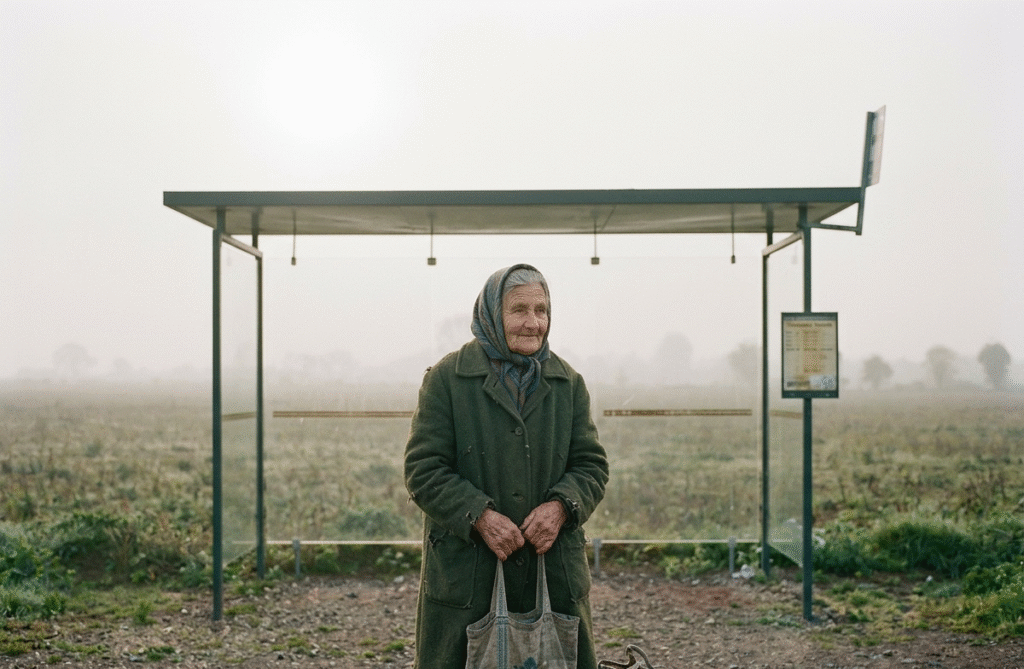
Imagine requiring emergency healthcare, but the nearest hospital is 85 kilometres away. The journey requires a car you don’t own, travelling on roads served by buses that run twice weekly – if at all. For Anna, a 73-year-old widow living in a farmstead in Latvia’s Latgale region, this isn’t a hypothetical scenario. It’s her reality, shared by hundreds of thousands across the Nordic-Baltic region where dispersed settlement patterns create mobility challenges fundamentally different from those in dense cities.

Traffic management technology has traditionally focused on optimising vehicle flow: reducing congestion, minimising delays, and maximising throughput. Yet vehicles don’t experience frustration when stuck in traffic – people do. This fundamental distinction is driving a shift towards human-centred design (HCD) in mobility systems: an approach that puts people’s needs, experiences, and wellbeing at the centre of transportation planning and technology deployment.

This shift is particularly critical in regions facing unique demographic challenges. Latvia, with just 30 people per square kilometre, Estonia with just 31 people per square kilometre and Norway with 15 people per square kilometre, exemplifies a widespread Nordic-Baltic reality: vast territories, dispersed settlements, and populations concentrated in a few urban centres whilst rural areas steadily empty. In Kurzeme region, western Latvia, population density drops to just 18 people per square kilometre, with over 90% of settlements being individual farmsteads – single-family agricultural properties scattered across the landscape, often kilometres apart. These regions cannot simply import mobility solutions designed for dense metropolitan areas where 7,000 people per square kilometre (Copenhagen) create entirely different planning possibilities.

Human-centred traffic management recognises that effective mobility systems must serve diverse populations with varying needs: elderly residents requiring accessible transport, families managing school runs without personal vehicles, shift workers needing late-night connections, and rural communities maintaining connection to urban services. Technology becomes truly “smart” only when it improves real lives.


pexels silveremeya 7381780

The Human Cost of Vehicle-Centric Planning

According to Latvia’s Central Statistical Bureau, the country’s population density stood at 30 people per square kilometre in 2024 – among the lowest in the European Union. Since 1990, Latvia has lost 30% of its population (780,000 people), declining from 2.66 million to approximately 1.86 million by early 2025. The UN Population Division projects the population will fall to 1.5 million by 2045 – a further 23% decline.

This depopulation is dramatically uneven. Approximately 70% of Latvia’s population now lives in urban areas, with nearly one-third (592,000 people) concentrated in Riga alone. Meanwhile, rural population has declined to 563,000 people – just 30% of the total. Latgale region in eastern Latvia has experienced particularly severe decline, losing 1.7% of its population in 2024 alone, with density in some areas dropping below 15 people per square kilometre.

Latvia’s settlement pattern centres on “viensēta” – the traditional Latvian farmstead. Unlike village-based rural settlement common elsewhere in Europe, Latvian farmsteads are individual family properties scattered across the landscape. In Kurzeme region, over 90% of all settlements are farmsteads. Each farmstead historically formed a self-contained economic unit: dwelling house, livestock buildings, granary, threshing barn, and bathhouse arranged around a central yard, often separated from the nearest neighbour by several kilometres of forest or fields.

This dispersed settlement pattern creates profound mobility challenges. There are no village centres to anchor bus routes. Potential passengers are scattered across vast territories – ten farmsteads might be spread across 50 square kilometres. A bus route serving dispersed farmsteads might travel 40 kilometres whilst picking up only three or four passengers, creating per-passenger costs that no fare structure can sustain. Yet these farmsteads remain home to elderly residents, families maintaining agricultural traditions, and increasingly, urban refugees seeking quieter lives. Without mobility solutions designed for this reality, these populations face a stark choice: acquire personal transport despite limited means, or become effectively immobile.

The consequences are measurable. Vehicle-centric planning assumes personal car ownership – an assumption that creates severe inequalities when public transport is absent. Riga has 6.6 physicians per 1,000 residents, whilst other regions have between 1.9 and 2.2 (the EU average is 4.3). Rural residents must travel 50 – 100 kilometres for specialist care. The OSW Centre for Eastern Studies documented how limited infrastructure creates a “demographic vicious cycle”: fewer services make areas less attractive, accelerating outmigration, which further reduces service viability. Without personal transport, the elderly, young people without driving licences, people with disabilities, and lower-income households become effectively excluded. These aren’t edge cases – they represent substantial portions of Latvia’s 563,000 rural residents.


pexels shox 29174553

What Human-Centred Design Actually Means

Traditional traffic management measures success through vehicle throughput, average speeds, and queue lengths. Human-centred approaches ask fundamentally different questions:

  • Can elderly residents access essential services independently?
  • Can families manage daily life without owning multiple vehicles?
  • Can shift workers reach employment at non-standard hours?
  • Can young people access education and social opportunities?
  • Can farmstead residents maintain urban connections without forced relocation?

These questions lead to different technological priorities. Instead of maximising vehicle speeds, systems prioritise reliable connections between dispersed communities and service centres. Instead of optimising peak-hour throughput, systems ensure adequate coverage throughout the day and week. For Latvia’s farmsteads, success means ensuring Anna can reach her medical appointments – not reducing average journey time by 90 seconds.

Human-centred design explicitly considers diverse needs from the outset across four dimensions:

Physical accessibility: Systems must serve people with mobility limitations, visual or hearing impairments, and cognitive differences. In dispersed regions, this means ensuring accessible connections exist between isolated homes and services, not merely ensuring vehicles themselves are accessible.

Economic accessibility: Transport costs must not create barriers to employment, education, or healthcare access. Latvia’s rural regions have below-average incomes; service design must acknowledge household budget constraints.

Digital accessibility: Real-time information systems must remain usable for people with limited digital literacy or without smartphones. Elderly farmstead residents may lack the technical familiarity urban digital natives assume.

Temporal accessibility: Services must accommodate varied schedules beyond standard commuting patterns – shift work, irregular care responsibilities, emergency medical travel, and agricultural seasonal demands.


pexels yulian alexeyev 199755 618277

Why Metropolitan Solutions Cannot Serve Low-Density Regions

The mathematics of public transport are unforgiving. Urban systems rely on passenger density to justify frequent service. Copenhagen, with 7,000 people per square kilometre, can run buses every 5–10 minutes and still fill seats. Kurzeme, with 18 people per square kilometre spread across farmsteads, faces entirely different economics.

Consider a 40-kilometre bus route through rural Kurzeme. At 18 people/km², the route passes through territory containing perhaps 720 total residents. If 10% use public transport regularly (an optimistic assumption), that’s 72 potential passengers scattered across 40 kilometres. Running hourly service would mean most buses carry zero to three passengers – generating costs of €50–100 per passenger per journey. This economic reality explains why rural bus routes often run twice weekly rather than hourly, which in turn explains why rural residents acquire cars despite limited means.

Rather than fixed routes with scheduled departures regardless of demand, human-centred systems in low-density areas employ demand-responsive transport (DRT) – services operating based on actual travel requests. Three features distinguish these systems:

Virtual pick-up points: Rather than physical bus stops at fixed locations, systems designate pick-up points activated by request. A farmstead 3 kilometres from the nearest road can have a virtual stop at the road junction, dramatically increasing coverage without permanent infrastructure investment at every property.

Dynamic routing: Vehicles adjust routes based on actual requests rather than following predetermined paths. During low-demand periods, a single vehicle might serve multiple dispersed requests; during peak times (market day, medical appointment hours), multiple vehicles activate if needed.

Multiple booking channels: Users request rides through appropriate interfaces – phone calls for elderly users, apps for others – with advance booking or same-day requests depending on urgency. Systems optimise vehicle deployment and passenger grouping whilst respecting individual schedules.

Instead of running empty buses on fixed schedules, services activate based on actual need. Per-passenger costs remain manageable whilst service coverage persists across dispersed areas. The InterMod project, piloting smart mobility hubs in Estonia, Latvia, and Sweden’s low-density areas, is testing precisely these approaches – combining demand-responsive services with multimodal integration to serve populations that fixed-route systems cannot economically reach.

Technology in Practice: SMARTIN and Fits Traffic

The EU-funded SMARTIN project (Smart digital solutions for multimodal, accessible, resilient, user-centric urban infrastructure) exemplifies how technology can support genuinely human-centred mobility. Rather than optimising vehicle flow, SMARTIN explicitly prioritises accessibility, resilience, and multimodality – outcomes that directly benefit people rather than merely moving vehicles efficiently.

SMARTIN creates a connectivity platform where transport infrastructure assets are digitalised, and mobility optimisation services operate harmoniously. Its AI-driven analytics fuse infrastructure monitoring data at different geospatial resolutions, enabling proactive incident detection and predictive maintenance. The critical distinction is purpose: traditional intelligent transport systems monitor infrastructure to maximise vehicle throughput. This project monitors infrastructure to enhance service quality from users’ perspectives – reliability, accessibility, journey times for actual trips people need to make.

Fits Traffic, developed by dots. with 10 years of transportation systems experience and participating in the SMARTIN project, translates these human-centred principles into operational practice. Where SMARTIN establishes the framework for user-centric infrastructure, Fits Traffic provides the tools that make this vision manageable at regional scale.

The unified back-office platform integrates monitoring data from multiple sources and locations into a single operational view – enabling the kind of coordinated, responsive service that human-centred mobility requires, without placing an unrealistic administrative burden on smaller regional operators. The Fits Vision system uses computer vision analytics to transform existing camera infrastructure into intelligent monitoring without requiring expensive new sensor deployment.

For regions facing depopulation and constrained tax bases, this cost-effectiveness is not merely a procurement advantage – it determines whether human-centred mobility remains an aspiration or becomes a practical reality for the people who need it most.


Building Toward Resilient, People-Centred Mobility

The shift toward human-centred traffic management represents more than technological evolution – it reflects a fundamental reframing of what transport systems should accomplish. Achieving this requires policy frameworks aligned with different priorities.

Social objectives as core metrics: Transport planning must explicitly measure success through accessibility indicators – can people reach employment, healthcare, education, social participation – rather than purely technical metrics like vehicle throughput. Latvia’s National Development Plan should incorporate specific targets for rural mobility access alongside traditional efficiency measures.

Flexible regulatory frameworks: Regulations designed for scheduled fixed-route services may inadvertently block demand-responsive innovations. Policy must enable experimentation with new service models whilst maintaining safety standards. The InterMod project’s pilots demonstrate this flexibility in practice.

Funding mechanisms matched to demographics: Low-density regions with declining populations cannot fund mobility through local resources alone. When Latgale loses 1.7% of its population annually whilst still needing to serve the same geographic territory, per-capita infrastructure costs inevitably rise. National policies must recognise that maintaining rural connectivity serves broader social objectives worth public investment.

Inclusive participation in planning: People experiencing mobility barriers – elderly farmstead residents, people with disabilities, households without vehicles – must directly inform system design rather than being represented only by technical experts’ assumptions about their needs.

The UN Population Division projects Latvia’s population will decline to 1.5 million by 2045 – a 20% decrease from current levels. Human-centred demand-responsive approaches explicitly design for this demographic change. As populations decline, systems scale naturally – fewer riders mean fewer vehicles operating, but service availability persists for remaining residents. Fixed infrastructure optimised for 2024 population levels becomes increasingly inefficient as 2045 approaches, with empty buses running predetermined routes serving ever-fewer passengers.

Perhaps more importantly, effective mobility systems can help slow demographic decline itself. Research on rural depopulation consistently identifies limited services and connectivity as push factors. When farmstead residents like Anna can maintain connections to healthcare, employment, and social networks without forced relocation, depopulation pressures ease. Mobility becomes part of rural development strategy, not merely a technical transport challenge.


Conslusion

Traffic management technology is neither inherently vehicle-focused nor people-focused – these represent design choices reflecting priorities and values. Systems optimised for maximum vehicle throughput serve one set of objectives; systems designed for inclusive mobility serve another. In regions like the Nordic-Baltic, where demographic realities create unique challenges, the choice between these approaches has profound consequences.

Vehicle-centric systems that work brilliantly in Copenhagen’s density leave Latvia’s farmstead populations effectively immobile, accelerating rural decline and deepening inequalities. The 563,000 people living in Latvia’s rural areas – Anna and hundreds of thousands like her – deserve mobility systems designed for their reality, not adapted from incompatible metropolitan models.

Human-centred design asks a deceptively simple question: does this system help people live the lives they want to live? For the 73-year-old requiring medical care, the teenager seeking education opportunities, the shift worker maintaining employment, or the family choosing to remain in their rural community – the answer to this question determines whether mobility technology truly serves its purpose.

As technology continues advancing – AI-driven analytics, computer vision monitoring, predictive maintenance, demand-responsive routing – the critical question remains not what technology can do, but who it serves. Projects like SMARTIN and InterMod, solutions like Fits Traffic, demonstrate that technology can indeed serve human needs when explicitly designed for that purpose.

The “viensēta” – Latvia’s traditional dispersed farmstead – represents both the challenge and the opportunity. These settlements cannot be served by traditional public transport. But they can be served by human-centred systems designed specifically for dispersed populations. The question is whether we choose to design such systems, or continue applying metropolitan solutions to fundamentally different realities.

References

Central Statistical Bureau of Latvia. (2025). Population and population change. Official Statistics Portal. https://stat.gov.lv/en/statistics-themes/population/population/247-population-and-population-change

Latvia’s population is 1,857,000 in 2025. (2025, June). LSM Public Broadcasting of Latvia. https://eng.lsm.lv/article/society/society/02.06.2025-latvias-population-is-1857000-in-2025.a601488/

United Nations Department of Economic and Social Affairs. (2024). World Population Prospects: The 2024 Revision. https://population.un.org/wpp/

Looking for a way out: Latvia’s demographic crisis. (2024, July). OSW Centre for Eastern Studies. https://www.osw.waw.pl/en/publikacje/komentarze-osw/2024-07-16/w-poszukiwaniu-drogi-wyjscia-lotwa-wobec-kryzysu

Demographic Situation and Development of Demographic Policy in Latvia. (2024, November). China-CEE Institute. https://china-cee.eu/2025/01/03/latvia-political-briefing-demographic-situation-and-development-of-demographic-policy-in-latvia/

The Latvian Farmstead, 16th–21st Century. Latvian Cultural Canon. https://kulturaskanons.lv/en/archive/latviesu-vienseta/

Tiru, M., Kurvits, K., Ahas, R., & Saluveer, E. (2022). Framework for connecting the mobility challenges in low density areas to smart mobility solutions: the case study of Estonian municipalities. European Transport Research Review, 14(28). https://doi.org/10.1186/s12544-022-00557-y

Baeten, S., & Neven, A. (2023). Sustainable mobility in smart cities: a document study of mobility initiatives of mid-sized Nordic smart cities. European Transport Research Review, 15(44). https://doi.org/10.1186/s12544-023-00610-4

Smart communities in the Nordic-Baltic region: A literature review. (2026, January). Nordregio. https://nordregio.org/publications/smart-communities-in-the-nordic-baltic-region-a-literature-review/

SMARTIN Project. (2026). Smart digital solutions for multimodal, accessible, resilient, user-centric urban infrastructure. EU Horizon Programme, Project ID 101203240. https://cordis.europa.eu/project/id/101203240

InterMod Project. (2025). Smart green mobility hubs in low-density areas. Central Baltic Programme. https://centralbaltic.eu/project/intermod/

Other articles

We are here to help

We're here to help you with any questions you have - from how to get started to questions specific to your situation.